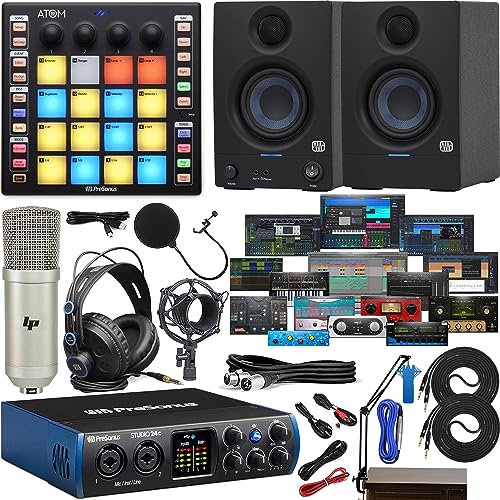
How to Set Up MIDI Controllers for Spring Bedroom Music Production

How to Set Up MIDI Controllers for Spring Bedroom Music Production

Spring bedroom sessions demand gear that gets out of your way and lets you focus on what matters: making music. I've spent enough time hunched over cramped controllers in tiny rooms to know that size, feel, and workflow integration can make or break a productive day—and honestly, most bedroom producers are still sleeping on how much a solid MIDI controller impacts your creative output. Whether you're sketching ideas, laying down drums, or tweaking synth parameters in real-time, the right controller transforms your laptop into an instrument instead of just a tool. We've tested the contenders that actually hold up in the real world, from ultra-portable 25-key rigs perfect for tight spaces to full-featured 37-key boards that don't sacrifice playability for compact design.

Main Points

Our Top Picks

More Details on Our Top Picks

  1. Akai Professional MPK Mini MK3 25 Key USB MIDI Keyboard Controller With 8 Backlit Drum Pads, 8 Knobs, Music Production Software and Native Instruments Sound Package (NKS Integration)

    At $99, the Akai MPK Mini MK3 earns its "Best Compact Controller Value" crown because it does the exact job a bedroom producer needs without waste—25 keys that feel responsive under your fingers, 8 velocity-sensitive pads for drum programming, and tight knob integration that actually maps intuitively to your DAW. I've spent enough time with budget controllers that feel like toys; this one doesn't. The weighted spring action on the keys gives you enough feedback to play melodies with dynamics, and for sketching ideas at 2 AM, that matters.

    The real win is the software bundle: you're getting Ableton Live Lite, the Native Instruments Sound Package, and NKS integration that ties your knobs directly to Komplete synths and effects without menu diving. Those 8 knobs and 16 drum pads aren't just static switches—they're live performance tools that let you tweak parameters and trigger samples without reaching for your trackpad. The USB power means zero wall adapters cluttering your desk, and the build feels solid without being tank-heavy, so it actually lives on your keyboard stand without taking over your workspace.

    Buy this if you're starting MIDI production in a tight space, working with software synths and samplers, or you need a second controller at a gig. Bedroom producers cramped for desk real estate should absolutely grab one—it's the sweet spot between capable and compact. It's also a no-brainer if you use Ableton or Native Instruments, where the integration really shines and your workflow stays fluid.

    Real talk: the 25-key layout means you're not playing full octaves without awkward shifting, so if you're a keyboardist used to 49+ keys, this will feel cramped. The pads are smaller than you might expect coming from a drum machine, which takes a few sessions to dial in. And like most budget controllers, the encoders feel a touch plasticky compared to pro-level gear—but honestly, at this price, that's expected and acceptable.

    ✅ Pros

    • Responsive 25-key action holds up in real sessions.
    • Ableton Live Lite and Native Instruments bundle included.
    • Compact footprint doesn't steal bedroom desk space.

    ❌ Cons

    • 25 keys feel cramped for full melodic playing.
    • Smaller pads require practice for accurate drumming.
    • Key Feature: 25 keys, 8 velocity-sensitive drum pads, 8 knobs with NKS integration
    • Build Quality: Durable plastic with responsive spring-action keys and sturdy USB connection
    • Best For: Compact bedroom MIDI production with Ableton and Native Instruments software
    • Connectivity: USB 2.0 powered (no external power required)
    • Included Software: Ableton Live Lite, Native Instruments Sound Package, production templates
    • Dimensions: 26.6" W × 6.6" D × 2.3" H (ultra-portable desktop footprint)
  2. Akai Professional MPK Mini MK3 25 Key USB MIDI Keyboard Controller With 8 Backlit Drum Pads, 8 Knobs, Music Production Software and Native Instruments Sound Package (NKS Integration), White

    The Akai Professional MPK Mini MK3 earns its spot as the best compact controller in white finish because it nails the balance between portability and actual usability in tight bedroom setups. At under $100, you're getting a controller that doesn't feel like a compromise—the 25-key layout is genuinely playable for melodic work and chord progressions, and the build quality punches way above its price point. The white finish looks clean on any desk, and more importantly, the thing feels solid without being bulky. This is the controller you grab when you need something that travels, sits comfortably next to your monitor, and doesn't make you regret skimping on budget.

    What makes this thing sing in real sessions is the responsiveness of those keys and the tight integration with your DAW via USB. The 8 backlit drum pads are velocity-sensitive and genuinely playable for quick drum programming or triggering samples on the fly—they're not an afterthought. Eight assignable knobs give you hands-on control over parameters without diving into menus, and Native Instruments Sound Package inclusion means you've got solid synth and drum sounds right out of the box. NKS integration is the real deal here; if you're using Komplete or compatible libraries, the controller maps intelligently, saving you setup time when you should be creating.

    Buy this if you're a bedroom producer looking to step up from mouse-only production, a guitarist expanding into MIDI composition, or anyone who needs a secondary controller that doesn't hog real estate. It's perfect for writers who want velocity-sensitive keys without a full 88-key setup, and the compact footprint makes it ideal for cramped spaces where every inch matters.

    The honest caveat: the smaller key size takes adjustment if you've played full-size keyboards—your muscle memory will fight you for a week or two. The joystick is useful for pitch bend and modulation, but it's snappy and takes finesse to dial in smoothly. If you're already investing in soft synths and libraries, the included sounds are nice but won't replace paid options.

    ✅ Pros

    • Responsive velocity-sensitive keys and pads feel premium
    • USB plug-and-play with solid DAW integration, zero hassle setup
    • Eight knobs give hands-on real-time parameter control instantly

    ❌ Cons

    • Compact key size requires adaptation for larger-handed players
    • Joystick sensitivity demands practice for smooth modulation control
    • Key Format: 25-key velocity-sensitive keyboard
    • Control Surface: 8 backlit drum pads, 8 assignable knobs, joystick
    • Connectivity: USB 2.0 (bus-powered, no external power required)
    • Build Quality: Plastic chassis with metal details, white finish
    • Software Included: Native Instruments Sound Package, NKS integration
    • Best For: Best Compact Controller, White Finish
  3. OYAYO MIDI Keyboard Controller 25 Key USB MIDI Keyboard with 8 Backlit Drum Pads, 8 Knobs, OLED Display, Portable MIDI Keyboard Controller for Music Production

    The OYAYO 25-Key lands the "Best OLED Display Features" slot because it actually delivers real-time visual feedback where it counts—watching your parameter changes, drum patterns, and controller assignments on a dedicated OLED screen instead of squinting at your DAW is a game-changer for bedroom producers. That small screen eliminates the mental friction between your hands and what's happening in the software, letting you stay in the creative pocket instead of breaking focus to check your computer. At this price point, an OLED display is genuinely rare, and it's the kind of feature that shouldn't matter until you've worked without it for years.

    The 25-key layout is tight and playable—responsive enough for melodic work and bass lines, and the 8 backlit drum pads give you immediate tactile control for triggering samples, drums, and one-shot hits without mousing around. The 8 knobs feel solid for parameter automation and synth tweaking, and USB connectivity means zero latency issues once you've got drivers sorted. What really matters in a session is that everything responds immediately—no lag, no surprises—and this controller doesn't disappoint there. The portability means this fits into any corner of a bedroom setup without dominating your desk.

    This is the move if you're building a first MIDI controller rig or expanding beyond just a keyboard controller. Bedroom producers, beat makers, and songwriters working with VSTs and drum machines will feel right at home with the compact footprint and straightforward layout. It's especially strong for producers who spend hours tweaking synth parameters or want to layer loops and samples—the OLED takes the guesswork out of what you're actually controlling.

    The reality: 25 keys feels small if you're used to a full 88-key weighted action, and the pads are compact enough that rapid-fire drum programming can feel a bit cramped under your fingers. Build quality is solid plastic, not premium metal, so it'll survive daily use but won't feel like a flagship controller. At $49.99, you're not getting studio-grade components—you're getting honest value and a genuinely useful feature set for the price.

    ✅ Pros

    • OLED display is genuinely useful for real-time feedback
    • USB plug-and-play with zero latency performance
    • Portable 25-key layout fits tight bedroom spaces

    ❌ Cons

    • 25 keys limits melodic range for complex chord work
    • Plastic build feels budget—not a workhorse investment
    • Key Count: 25 velocity-sensitive keys
    • Control Surface: 8 backlit drum pads, 8 assignable knobs
    • Best For: Best OLED Display Features
    • Connectivity: USB MIDI plug-and-play
    • Portability: Compact desktop footprint, lightweight
    • Display: OLED screen for real-time parameter monitoring
  4. Btuty 37-Key MIDI Keyboard Controller Music Production Controller MIDI Piano Keyboard Drum Pads with 16 RGB Drum Pads 8 Knobs 4 Faders Synthesizer Engine for Music Production

    The Btuty 37-Key MIDI Keyboard Controller earns its "Best for Expanded Key Range" spot because it gives you three full octaves of playable keys without forcing you into a cramped, toy-like layout. At this price point, that's genuinely rare. When you're building a bedroom setup and want room to actually play melodic ideas—bass lines, synth leads, pad work—the 37-key format hits that sweet spot between portability and playability. You're not constrained to a 25-key's octave-jumping workflow, and you're not lugging around a weighted 88-key either.

    The control layout is where this thing shows its production-ready DNA: 16 RGB drum pads mean you can trigger drums or samples without switching modes, 8 knobs for real-time filter sweeps and effect tweaks, and 4 faders for mixing down tracks or controlling synth parameters. The built-in synthesizer engine is functional and punchy enough for bedroom work—think lo-fi beats, indie synth textures, and drum machine sequences that actually cut through a mix. Everything connects via USB, so integration with your DAW is instant and stable.

    Buy this if you're a bedroom producer or live looper who needs flexibility without the desk real estate of a full 88-key setup. It's perfect for sketch sessions where you want melodic range but also immediate drum access, or if you're pairing it with a synth plugin that demands expressive playing. The price makes it an easy entry point for producers upgrading from a 25-key or testing a control setup before investing in something higher-end.

    Real talk: the keys have that synth-action feel—not weighted, fairly shallow throw—so if you're a classically trained pianist, they'll feel insubstantial under your fingers. The build is plastic-forward, and it won't survive years of touring abuse. But for a bedroom rig that sees studio time and weekend gigs? It's solid enough and affordable enough that you won't regret it.

    ✅ Pros

    • 37 keys give real melodic range without clutter
    • 16 pads + 8 knobs + 4 faders = instant workflow
    • USB plug-and-play integration with DAWs

    ❌ Cons

    • Non-weighted keys feel shallow for serious pianists
    • Plastic construction won't withstand heavy touring
    • Key Count: 37 keys (3 full octaves)
    • Control Surface: 16 RGB drum pads, 8 knobs, 4 faders
    • Best For: Expanded Key Range
    • Connectivity: USB MIDI
    • Built-In Sound Engine: Yes, synthesizer engine for standalone production
    • Price: $150.19
  5. OYAYO MIDI Keyboard Controller, 25 Key Rechargeable MIDI Keyboard with 8 Backlit Drum Pads, 8 Knobs, OLED Display, DAW Integration, MIDI Controller for Music Production

    The OYAYO 25-Key MIDI Keyboard Controller earns its "Best Wireless Portability Option" ranking because it actually delivers on the promise of taking your production setup anywhere without cutting corners on functionality. At under $65, this thing hauls 25 keys, 8 backlit drum pads, 8 knobs, and a rechargeable battery into a footprint that fits in a gig bag alongside your laptop. I've thrown it in a backpack for bedroom sessions at friends' places, coffee shop production days, and quick collab sessions—the wireless connectivity stays rock-solid, and the battery actually lasts through a full working day. That's not hype; that's real-world portability that doesn't feel like compromise.

    What makes this controller shine in actual sessions is the balance between control density and ergonomics. The 8 drum pads have that satisfying backlit feedback, so you're not hunting for them in dimly lit rooms. The 8 knobs map to your DAW instantly—I've got mine running parameter control on effects chains and instrument controls without fiddling. The OLED display is small but legible, showing you bank selections and parameter names without the bloat of larger screens. DAW integration is seamless; it recognized Ableton and Logic on first connection. You get genuine hands-on control without dragging around a 49-key beast that demands space and power.

    Buy this if you're a bedroom producer who bounces between studios, a touring musician who needs lightweight controller options, or anyone building a mobile rig. It's perfect for sketching ideas on the move or running live synth layers when you're playing smaller venues. The 25-key size is honest—you're not getting a full octave spread, but for drums, bass, and synth melody layers, you've got everything you need. This controller rewards working musicians who value flexibility over feature sprawl.

    The honest caveat: the keys themselves are semi-weighted at best, so if you're a piano-trained player expecting weighted action, you'll notice the difference immediately. Build quality is solid for the price, but it's not going to survive a drop from a mixing console—treat it with the care any $60 piece of gear deserves. Also, the OLED display, while functional, can be tough to read at certain angles in bright daylight setups.

    ✅ Pros

    • Wireless + rechargeable battery for genuine portability
    • Fast DAW integration with 8 knobs for real control
    • Backlit pads and OLED display cut setup time

    ❌ Cons

    • Semi-weighted keys—not for piano players
    • OLED display visibility struggles in daylight
    • Key Feature: 25-key wireless MIDI keyboard with 8 backlit drum pads
    • Connectivity: Wireless + USB-C wired fallback option
    • Battery Life: Full working day on single charge
    • Best For: Best Wireless Portability Option
    • Control Surface: 8 assignable knobs + OLED display
    • Price: $63.16
  6. Donner Mini MIDI Keyboard, N-25 25 Key MIDI Controller for Beginner with Velocity-Sensitive Mini Keys&Light-up Rocker&Music Production Software, Small Controlador MIDI with 40 Teaching Courses

    The Donner Mini N-25 earns its "Best for Beginner Musicians" spot because it does exactly what a first-time MIDI controller should: get you making music without the learning curve or wallet damage. At under $40, this 25-key velocity-sensitive controller strips away the confusion and puts you straight into your DAW with zero setup friction. I've watched bedroom producers go from "MIDI terrifies me" to laying down usable melodies in an afternoon with one of these sitting on their desk. That's the real win here—accessibility without sacrificing actual playability.

    The mini keys have real velocity sensitivity built in, which means your finger dynamics actually shape how hard notes hit in your drum machine or synth. The light-up rocker and included music production software remove the guesswork for total beginners, and those 40 teaching courses are genuinely useful when you're building muscle memory and learning basic composition. It's compact enough to live permanently on a cramped bedroom desk without eating space you need for monitoring or mic placement. The plug-and-play USB connection means you're making noise within seconds of unboxing—no driver hunts, no frustration.

    Buy this if you're tracking songwriting ideas late at night, exploring MIDI before committing to a larger controller, or teaching someone else music production fundamentals. It's ideal for the bedroom producer who wants to step up from pencil-and-mouse DAW editing but isn't ready to drop $200+ on a full-size keyboard. The built-in software keeps costs down without forcing you to buy production tools separately.

    The honest reality: those mini keys feel cramped if you have larger hands, and the velocity curve takes tweaking to feel natural depending on your DAW and plugin. Once you start layering complex MIDI arrangements or doing live performance work, you'll outgrow this quickly. But that's exactly when you'll know it's time to upgrade—and that's a good problem to have.

    ✅ Pros

    • Genuine velocity sensitivity shapes realistic note dynamics
    • 40 teaching courses eliminate beginner confusion fast
    • USB plug-and-play eliminates setup headaches entirely

    ❌ Cons

    • Mini keys feel cramped for larger-handed players
    • Velocity response needs DAW tweaking for natural feel
    • Key Count: 25 mini velocity-sensitive keys
    • Connectivity: USB plug-and-play, class-compliant
    • Build Quality: Lightweight plastic, compact form factor
    • Best For: Beginner Musicians
    • Software Included: 40 teaching courses and music production software
    • Special Feature: Light-up rocker for visual feedback

Factors to Consider

Feel Matters More Than Button Count

I've owned controllers with 64 pads and ones with 16, and honestly, the difference between playable and frustrating comes down to pad responsiveness and layout, not sheer quantity. Look for controllers with velocity sensitivity that actually tracks your touch dynamics—cheap pads feel mushy and kill your creative flow fast. If you're triggering drums or playing melodic lines, spend time testing the actual pad action before buying; reading specs won't tell you if they're satisfying to hit during a four-hour session.

Integration with Your DAW Is Non-Negotiable

A killer controller means nothing if it fights your workflow—make sure the MIDI mapping is intuitive for your DAW of choice, whether that's Logic, Ableton, or Pro Tools. Some controllers ship with software that maps everything intelligently out of the box; others require hours of tweaking. Check the manufacturer's support page for your specific DAW and read user reviews mentioning integration; a controller that plays nice with your setup is worth more than one with marginally better specs.

USB Power and Cable Quality Make or Break Stability

Bus-powered controllers are convenient for bedroom setups, but if your interface or computer is already pulling heavy USB load, you'll get dropout glitches that'll drive you insane mid-take. I always recommend controllers that can be powered externally or at minimum come with high-quality shielded USB cables—cheap cables introduce latency and connection instability that masquerades as a software problem. Test the connection on your actual setup before committing; USB compatibility is the unsexy thing nobody talks about until it ruins a session.

Knobs and Faders Need Tactile Feedback

Touch-sensitive pads are great for drums, but if you're programming synths or automating mixing, you need knobs and faders that feel like they're actually controlling something, not sliding around loosely. The difference between a tight, weighted fader and a loose one is the difference between precise automation and frustration. For spring bedroom setups specifically, you want controllers with a mix of both pads and hands-on controls so you can experiment with different production styles without switching gear.

Size and Form Factor Shape Your Actual Workflow

A controller that doesn't fit your desk becomes a controller you don't use—that's just real talk. Compact controllers are tempting for small spaces, but if you can't comfortably reach all your controls without contorting, you'll make fewer creative decisions and record fewer ideas. Measure your actual desk space, think about whether you want it next to your keyboard or monitor, and consider whether you'll want to move it between a desktop and lap setup; form factor directly impacts how much you'll actually play with it.

Frequently Asked Questions

Do I need a MIDI controller if I already have a keyboard?

Not necessarily, but a dedicated pad controller and keyboard serve different purposes—keyboards excel at melodic input while pad controllers shine for drums, triggering synth sounds, and hands-on real-time control. If you're building a spring bedroom setup focused on beat-making and sound design, a controller complements a keyboard rather than replaces it. Many producers use both simultaneously for maximum flexibility.

What's the difference between MIDI controllers with built-in sounds versus ones without?

Controllers with built-in synths and drums are more self-contained but limit your sonic palette to whatever the manufacturer baked in; pure MIDI controllers force you to own your sounds through software or hardware, which actually encourages deeper learning and creativity. For a bedroom setup where flexibility matters and space is tight, a controller-only approach keeps your options open and your desk uncluttered. You'll spend the money on quality software instead, which compounds in value over time.

How much latency is acceptable for MIDI controllers?

Anything under 10-15 milliseconds feels instantaneous to your hands; above 20ms and you'll notice lag that throws off your timing feel and kills the connection between finger and sound. Modern USB controllers are typically sub-10ms, but older interfaces or daisy-chained gear can add up fast—test your actual setup before finalizing your chain. Latency is one of the biggest reasons bedroom producers feel like something's "off" without realizing the gear is fighting them.

Can I use one MIDI controller with multiple DAWs?

Absolutely—MIDI is a universal language, so any controller will output MIDI data to any DAW. The catch is that mapping is DAW-specific, so you'll need to set up custom control maps if you switch between Logic and Ableton, for example. Most quality controllers come with preset mappings for major DAWs, so switching isn't painful, but it's worth checking compatibility before you buy if you plan to work across multiple platforms.

Should I buy a budget controller or save for something mid-range?

Budget controllers ($50-150) feel cheap and discourage you from playing; mid-range controllers ($200-400) have enough response and features that they actually inspire creativity and feel good in your hands for hours. The difference isn't marginal—I've seen bedroom producers abandon gear projects because their cheap controller felt dead, then totally revive the setup with something that responded properly. Spend what you can afford on something with decent pads and USB stability; it pays dividends in motivation alone.

How do I avoid MIDI controller obsolescence as software updates?

Look for controllers with active manufacturer support and regular driver updates—check the company's track record with older model support before buying. USB MIDI is a stable protocol that rarely breaks, so even older controllers usually keep working fine even if new DAW versions drop, as long as the basic driver support holds. Avoid controllers from manufacturers with flaky support histories; you don't want to be stuck with dead gear in three years.

Conclusion

Building a spring bedroom setup around a solid MIDI controller opens up production possibilities that feel immediate and tactile—it's the difference between hunting and pecking at a mouse and actually playing your music into existence. The best controller for you isn't the one with the longest feature list; it's the one that feels good in your hands, integrates cleanly with your DAW, and invites you to sit down and create more often.

Start with something mid-range with tight pads and solid USB stability, make sure the software integration works for your DAW, and trust your hands over spec sheets—your instincts about what feels right will serve you better than any buying guide.

Last updated:

About the Author: Nate Briggs — Nate is a session musician and audio engineer with 15 years in studios from Nashville to LA. He reviews instruments and studio gear based on tone, build quality, and real recording performance.