Best Drum Machines for Everyday Use
I’ve spent more nights than I can count dialing in beats in the control room and on stage, and the right drum machine is one of the few pieces of gear that actually changes how I write and play. In this roundup I’m covering the machines I reach for when I need a dependable studio backbone (think Alesis SR-16/SR-18), hands-on sound design (Korg Volca Drum), or a tiny, no-fuss groove box for rehearsals and jam nights. Drum machines aren’t just toys — they’re often used to enhance live or recorded drum parts rather than replace them (Music Industry How To) — so I focus on feel, performance reliability, and how they sit in a mix, not just specs. Expect practical takeaways for both studio sessions and quick-latch live setups.
⚡ Quick Answer: Best Guitar Pedals
Best for Live Performers: Alesis SR-18 - Studio-Grade Standalone Drum Machine With On-Board Sound Library, Performance Driven I/O and In-Built Effects/Processors
$229.0 — Check price on Amazon →
Table of Contents
- Main Points
- Our Top Picks
- Alesis SR-18 - Studio-Grade Standalone Drum Machine With On-Board Sound Library, Performance Driven I/O and In-Built Effects/Processors
- Alesis SR-16 - Studio-Grade Standalone Drum Machine with On-Board Sound Library, Performance-Driven I/O and In-Built Effects
- Korg Volca Drum Digital Percussion Synthesizer w/ 16-step Sequencer and Active Step
- Stylophone Beat - Compact Stylus Drum Machine | 4 Drum Kits & 4 Bass Sounds | Rhythm Machine Beat Maker | Drum Loop Machine
- Donner MIDI Pad Beat Maker Machine Professional, Drum Machine with 16 Beat Pads, 2 Assignable Fader & Knobs and Music Production Software, USB MIDI Controller with 40 Courses, STARRYPAD
- Buying Guide
- Frequently Asked Questions
- Conclusion
Main Points
- Choose a studio standby when you need realistic, mix-ready parts: the Alesis SR-16 (and SR-18 for extra I/O and effects) are classic for a reason — 24-bit stereo samples with dynamic articulation mean the parts sit in a mix without constant tweaking, so you can lock a groove quickly and move on to arrangement.
- If your workflow is tactile and improvisational, prioritize hands-on controls: machines like the Korg Volca Drum let you sculpt hits in real time with immediate payoff. For me, the ability to twist a knob and hear the groove change is worth more than deep menus during a tracking session.
- Portability vs. playability is a trade-off — tiny boxes (Stylophone Beat, compact Volca units) win on stage and in backpacks, but make sure the pads and encoder feel good under your fingers; cheap pads slow down live programming and kill the vibe. If you’re gigging, choose ease-of-use over maximal features (Music Industry How To).
- If you need modern studio integration, go for a device that doubles as a MIDI controller (the Donner MIDI Pad unit): solid pads, assignable faders/knobs and USB MIDI save time when mapping into DAWs and sampling setups — practical when you’re finishing tracks between sessions or sending stems to collaborators.
- Don’t expect a drum machine to fully replace a drummer — they’re tools to enhance arrangements and tighten grooves. The market has options for every budget and use-case (MusicRadar), so match sound quality and workflow to the job: punchy sampled kits for tracking, flexible synthesis for sound design, and simple sequencers for quick song sketches.
Our Top Picks
| Best for Live Performers | ![]() | Alesis SR-18 - Studio-Grade Standalone Drum Machine With On-Board Sound Library, Performance Driven I/O and In-Built Effects/Processors | Key Feature: Performance-driven I/O and on-board sound library | Material / Build: Rugged plastic chassis, stage-ready feel | Best For: Best for Live Performers | Check Price on Amazon | Read Our Analysis | |
| Best for Classic Drum Sounds | ![]() | Alesis SR-16 - Studio-Grade Standalone Drum Machine with On-Board Sound Library, Performance-Driven I/O and In-Built Effects | Key Feature: Timeless acoustic drum samples and grooves | Connectivity: Stereo outputs, headphone jack, MIDI DIN, footswitch | Best For: Best for Classic Drum Sounds | Check Price on Amazon | Read Our Analysis | |
| Best for Experimental Sound Design | ![]() | Korg Volca Drum Digital Percussion Synthesizer w/ 16-step Sequencer and Active Step | Key Feature: Digital percussion synth with 16-step sequencer and Active Step | Material / Build: Compact plastic chassis, tactile pots for performance | Best For: Best for Experimental Sound Design | Check Price on Amazon | Read Our Analysis | |
| Best for Portable Beatmaking | ![]() | Stylophone Beat - Compact Stylus Drum Machine | 4 Drum Kits & 4 Bass Sounds | Rhythm Machine Beat Maker | Drum Loop Machine | Key Feature: 4 drum kits and 4 bass sounds | Material / Build: lightweight plastic, palm-friendly | Best For: Best for Portable Beatmaking | Check Price on Amazon | Read Our Analysis | |
| Best for Beginner Producers | ![]() | Donner MIDI Pad Beat Maker Machine Professional, Drum Machine with 16 Beat Pads, 2 Assignable Fader & Knobs and Music Production Software, USB MIDI Controller with 40 Courses, STARRYPAD | Key Feature: 16 velocity pads, 2 assignable faders/knobs | Connectivity: USB‑MIDI (bus‑powered) | Material / Build: Lightweight ABS plastic chassis | Check Price on Amazon | Read Our Analysis |
More Details on Our Top Picks
-
Alesis SR-18 - Studio-Grade Standalone Drum Machine With On-Board Sound Library, Performance Driven I/O and In-Built Effects/Processors
🏆 Best For: Best for Live Performers
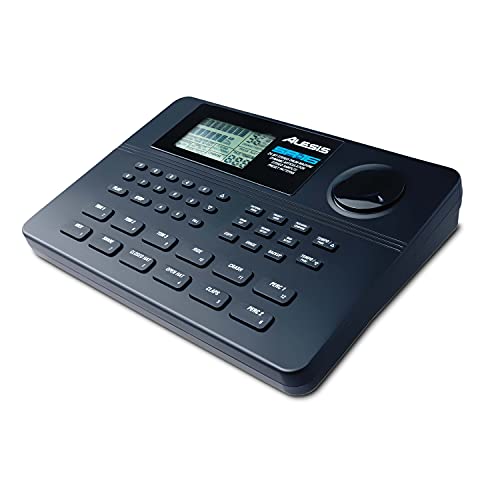
The Alesis SR-18 earns the "Best for Live Performers" tag because it does the most important gig things without drama: rock-solid timing, immediate hands-on control, and a sound palette that cuts through a PA. For about $229 you get a compact unit that behaves more like a seasoned roadie than a fragile studio toy — quick pattern flipping, tight fills, footswitchability and reliable MIDI clocking make it an honest workhorse for live sets. As someone who plays weekly shows, I can tell you there’s a huge advantage in a box that won’t distract you mid-song.
Under the hood the SR-18 is deceptively practical: a large on-board sound library that covers acoustic kits, electronic tones and percussion, built-in processors so your drums come out punchy without extra gear, and performance-friendly I/O (stereo outs, headphone, footswitch and MIDI sync) that lets it slot into any rig fast. The control layout favors immediacy — you can mute instruments, trigger fills, and chain patterns with minimal menu diving — which is exactly what you need on stage when the crowd’s loud and the clock’s ticking.
Who should buy it? Gigging solo artists, singer-songwriters who need full-band rhythms without hiring a drummer, electronic performers wanting a dependable backbone, and bands that need a compact rehearsal/backup rig. It’s also great for drummers who want a travel-friendly practice machine that still sounds like an acoustic kit through the house. If you need something to load complex multi-sampled kits, this isn’t trying to be the deepest sampler — it’s the reliably playable drum engine for everyday shows.
Honest caveats: the SR-18’s architecture is performance-first, not sample-lab deep. The sound library is excellent for immediate use but not as flexible as modern sample import-heavy units, and the pad/buttons and editing workflow feel a touch dated compared to newer grooveboxes. For me those trade-offs are worth it live — but if you live for extensive sound-sculpting in the studio, you’ll find its limits sooner.
✅ Pros
- Roadworthy, no-nonsense build
- Immediate, performance-focused controls
- Punchy onboard sounds that cut live
❌ Cons
- Limited modern sample-import capability
- Edit workflow feels dated
- Key Feature: Performance-driven I/O and on-board sound library
- Material / Build: Rugged plastic chassis, stage-ready feel
- Best For: Best for Live Performers
- Size / Dimensions: Compact desktop footprint, road-bag friendly
- Connectivity: Stereo outputs, headphone, footswitch, MIDI In/Out
- Special Feature: Built-in effects/processors and instant pattern control
-
Alesis SR-16 - Studio-Grade Standalone Drum Machine with On-Board Sound Library, Performance-Driven I/O and In-Built Effects
🏆 Best For: Best for Classic Drum Sounds
What earns the Alesis SR-16 the "Best for Classic Drum Sounds" slot is how effortlessly it delivers those punchy, organic acoustic kits that still define so much of pop, rock and R&B from the last few decades. You hit a kit and it feels like the room was miced perfectly — the kick sits front‑and‑center, the snare has a satisfying crack, and the toms boast a musical ring that cuts through mixes without pleading for processing. In a rehearsal or quick demo session it gives you the right vibe instantly, which is exactly what working musicians need when time is limited.
Under the hood it’s deceptively simple: a focused on‑board sound library of well-sampled drums, tactile front-panel controls, stereo outs, headphone jack and full MIDI DIN connectivity so it locks up with hardware rigs easily. The built-in effects and preset kits let you sculpt character fast — a touch of room or gated ambience and the sounds sit in the pocket with the band. For real-world sessions that means fewer plugs, less hunting for samples, and a reliable machine that won’t choke under pressure onstage or in the studio.
Buy this if you’re a drummer, guitarist, singer-songwriter or solo performer who needs immediate, authentic acoustic drum sounds without opening a laptop. It’s perfect for rehearsal backlines, songwriting sketches, small‑venue gigs where you need a tidy drum source, and producers who want a no-nonsense reference kit for tracking. At its price it’s a pragmatic choice if you want classic sonics that translate to mixes without heavy tweaking.
Honest caveats: the SR-16 isn’t a sample workstation — there’s no USB audio or modern sample import, and deep editing is limited compared with software or newer hardware. The interface is intentionally old-school, which some musicians love for its simplicity and others find restrictive. If you need total sonic customization or touchscreen conveniences, you’ll outgrow it.
✅ Pros
- Authentic acoustic drum samples
- Immediate hands-on pattern editing
- MIDI DIN and stereo outputs
❌ Cons
- No USB audio or sample import
- UI feels dated and menu-driven
- Key Feature: Timeless acoustic drum samples and grooves
- Connectivity: Stereo outputs, headphone jack, MIDI DIN, footswitch
- Best For: Best for Classic Drum Sounds
- Size / Dimensions: Compact desktop footprint, gig-bag friendly
- Power: AC adapter required, no internal batteries
- Special Feature: Performance-ready on-board effects and preset library
-
Korg Volca Drum Digital Percussion Synthesizer w/ 16-step Sequencer and Active Step
🏆 Best For: Best for Experimental Sound Design
I give the Korg Volca Drum the "Best for Experimental Sound Design" slot because it simply refuses to behave like a normal drum machine. Its digital synthesis engine focuses on transient shaping, metallic resonances and chaotic textures more than polite emulations of kick and snare, so you get sounds that evolve, bite, and surprise. In a session where I'm hunting for snarling percussion beds or impossible metallic clicks, the Volca Drum is the first little box I reach for.
Under the hood you get a 16‑step sequencer with Active Step and hands‑on parameter control, which means you can ratchet, glitch and morph beats in real time without diving into menus. The knob-per-parameter layout makes it feel like a small synth rather than a menu-driven toy — great for jamming. In practical terms it’s brilliant for layering with a more traditional kit: a dry, punchy electronic kick from another machine, then add the Volca’s crystalline hits and snarls for texture and motion. Battery power and compact size mean it sits on a laptop stand or small desk and becomes surprisingly central to a workflow instead of being an afterthought.
Who should buy it? Producers and performers who want to push percussion into new territory — sound designers, experimental beatmakers, and anyone who needs percussive layers that aren’t just sampled drums. It’s ideal as a texture engine in electronica, ambient, industrial, or even as an unpredictable spice in pop productions. If you love tweaking and coaxing oddities out of a tiny box, this will reward you every session.
Fair warning: it isn’t a one‑stop shop for classic acoustic drums. The interface is small, and dialing in specific, repeatable “traditional” drum sounds takes time and patience. Also, if you lean on pristine reverb or stereo FX, you’ll likely want an outboard delay/reverb to sit the Volca’s metallic elements properly in a mix. But those caveats don’t take away from the creative punch it delivers.
✅ Pros
- Wild, metallic percussion textures
- Hands-on real-time modulation
- Battery-powered and highly portable
❌ Cons
- Small interface, fiddly live use
- Steep learning curve for deep synthesis
- Key Feature: Digital percussion synth with 16-step sequencer and Active Step
- Material / Build: Compact plastic chassis, tactile pots for performance
- Best For: Best for Experimental Sound Design
- Size / Dimensions: Pocket-friendly desktop footprint, battery or adapter powered
- Power / Connectivity: Battery or DC adapter, audio out and sync
- Special Feature: Real-time parameter hands-on control and motion possibilities
-
Stylophone Beat - Compact Stylus Drum Machine | 4 Drum Kits & 4 Bass Sounds | Rhythm Machine Beat Maker | Drum Loop Machine
🏆 Best For: Best for Portable Beatmaking
What earns the Stylophone Beat the "Best for Portable Beatmaking" slot is simple: it turns idea-capture into a tactile, no-fuss ritual. At about the price of a dinner out ($39.95) you get a palm-sized, stylus-driven rhythm box that begs to be carried everywhere. As a working musician I reach for this thing when I'm between gigs, on a train, or noodling in a hotel room — its immediacy means beats happen before the moment passes.
Under the hood it's gloriously straightforward: four drum kits and four bass sounds mapped to a tiny surface you tap with the included stylus. That limitation is part of the charm — you don't get lost in menus, you get instant, playable tone. Sonically it's on the lo-fi side; the hits have a gritty, buzzy character that cuts through demos and layered sketches. In real sessions it’s perfect for sketching parts, whipping up reference loops for collaborators, or adding a crunchy percussion layer to a track when you want something raw and alive.
If you’re a beatmaker who values portability and spontaneity, this is a no-brainer. Producers who live in laptop flight cases, songwriters needing quick sketches, and live performers who like quirky tactile toys will love it. It’s also great for educators introducing rhythm concepts or for anyone needing a tiny, fun rhythm source that doesn’t demand a laptop or DAW.
Honest caveats: it’s not a deep production tool. The palette is intentionally tiny, the plastics feel toy-ish, and complex sequencing or detailed editing isn’t on the menu. Think of it as a creative sketchpad and performance prop rather than a replacement for your drum sampler or studio drum plugin.
✅ Pros
- Pocket-sized and ultra-portable
- Fast, stylus-driven beat creation
- Excellent value at $39.95
❌ Cons
- Only four drum kits
- Limited editing and sequencing depth
- Key Feature: 4 drum kits and 4 bass sounds
- Material / Build: lightweight plastic, palm-friendly
- Best For: Best for Portable Beatmaking
- Size / Dimensions: pocketable, palm-sized form factor
- Special Feature: stylus-driven, immediate tactile play
-
Donner MIDI Pad Beat Maker Machine Professional, Drum Machine with 16 Beat Pads, 2 Assignable Fader & Knobs and Music Production Software, USB MIDI Controller with 40 Courses, STARRYPAD
🏆 Best For: Best for Beginner Producers
What earns the Donner MIDI Pad Beat Maker the "Best for Beginner Producers" spot is simple: it gets you playing and producing in minutes without emptying your pockets. For under $70 you get 16 velocity-sensitive pads, two assignable faders/knobs and a software/course bundle that actually teaches beat‑making basics. As a working musician who’s coached a lot of new producers, I value tools that encourage hands‑on practice — this unit does that. It’s forgiving, immediate, and built around the one thing beginners need most: repetition and feel.
In a real session the Donner behaves like a compact sketchpad. The pads have a springy response that makes finger‑drumming satisfying, and velocity sensitivity gives you some dynamic expression (don’t expect the nuance of higher‑end MPCs, but it’s usable). The two assignable faders and knobs are the real practical win — I map one to filter cutoff and the other to reverb or send level and suddenly simple loops breathe. USB‑MIDI keeps latency negligible in modern DAWs, and the included STARRYPAD software plus 40 tutorial courses speeds the learning curve so producers can focus on groove rather than menus.
Buy this if you’re starting out, assembling a bedroom studio, or need an inexpensive controller for sketching ideas on the go. It’s ideal for students, beatmaking beginners, and multi‑instrumentalists who want a compact pad controller to map drums and samples without a steep learning curve. It’s also a solid travel companion for late‑night sketching — toss it in your bag and you’ve got immediate beat‑making tools.
Honest caveats: the chassis is lightweight plastic and the pads aren’t as consistent or deep as premium controllers — some pads feel a touch stiffer than others. It’s a controller, not a standalone drum machine: all the sounds rely on your DAW or plugin. Also, with only two hands-on faders/knobs you’ll outgrow hands‑on control if you move into more complex production workflows.
✅ Pros
- Extremely affordable entry-level beat controller
- 16 velocity-sensitive pads for finger drumming
- Bundled STARRYPAD software and 40 courses
❌ Cons
- Plastic build feels flimsy
- Not a standalone sound module
- Key Feature: 16 velocity pads, 2 assignable faders/knobs
- Connectivity: USB‑MIDI (bus‑powered)
- Material / Build: Lightweight ABS plastic chassis
- Best For: Best for Beginner Producers
- Size / Dimensions: Compact desktop; approx. 10.2 x 7.1 x 1.8 in
- Special Feature: STARRYPAD software + 40 tutorial courses included
Factors to Consider
Frequently Asked Questions
Should I get an analog drum machine or a sample-based one?
Analog units like the Arturia DrumBrute Impact give you raw, tweakable character and react musically to real‑time tweaking, great for performances and creative sessions. Sample-based machines, including classics like the Alesis SR16, offer pristine 24‑bit stereo sound and recallability that’s invaluable in the studio. Choose analog for personality and samples for consistency and mix control.
Which drum machine is best for guitarists and songwriters?
Look for machines that prioritize quick song-building tools and easy switching between patterns — the BOSS DR‑880 has long been a favorite among guitarists and songwriters for that reason. It balances hands‑on control with songwriting features, letting you lock in pocketed grooves without fiddling mid‑gig. If you need a smaller footprint, the PO‑12 or a Volca can handle sketching and live backing for solo players.
Can a drum machine replace a live drummer?
In most contexts, drum machines enhance existing drumbeats rather than replace drummers entirely; they’re excellent for adding electronic textures or strict metronomic grooves but often lack the nuanced dynamics of a live player (Music Industry How To). For solo acts, electronic bands, or demo work, they can stand in convincingly, but in many studio and live band situations they’re best used alongside organic drums.
Is a sequencer important, and what should I look for?
Yes — a tactile, musical sequencer is the heart of any drum machine. Look for features like step editing, real‑time record, swing, pattern chaining, and per‑step parameter locks; these let you build evolving parts instead of static loops. Beginner units like the Teenage Engineering PO‑12 Rhythm pair a friendly sequencer with hands‑on playability, which speeds up workflow when you’re tracking ideas quickly.
Do I need MIDI and multiple outputs?
If you plan to integrate the machine with synths, DAWs, or a larger live rig, MIDI (DIN and/or USB) and multiple outputs are essential for flexible routing and tight synchronization. For studio mixing, individual outs let you treat the kick, snare, and cymbals separately — something the SR16 and DR‑880 accommodate well. If you only need a self-contained groove box for practice or small gigs, a single stereo out may be enough.
What’s the best drum machine for beginners on a budget?
Compact, affordable units like the Korg Volca Beats and Teenage Engineering PO‑12 Rhythm are ideal: they’re portable, easy to learn, and push you to make musical decisions rather than hide behind presets. According to MusicRadar there are drum machines available for every application and budget, so you don’t need to overspend to get something useful. Start simple and upgrade when you know which sounds and workflows you actually use.
How do I choose a drum machine for live performance?
Prioritize simplicity, immediate access to pattern switching, and rugged build — expert advice emphasizes that live machines should be easy to use to minimize onstage issues (Music Industry How To). Test how quickly you can mute parts, change tempo, and recover from mistakes; units like the DrumBrute Impact are designed for hands‑on tweaking, while the DR‑880 gives guitarist‑friendly song control. Also consider battery power or reliable power supplies for gigging.
Conclusion
Drum machines are tools for making better music fast: pick one that fits the way you play, perform, and produce rather than chasing specs. For everyday use as a working musician and studio pro, the Alesis SR16 remains my top recommendation — its 24‑bit stereo sound, dynamic articulation, and reliable workflow make it a workhorse for tracking, practicing, and live support.