

How to Choose the Right Midi Controllers
⚡ Quick Answer
In the fast-paced world of studio production and live performance, your MIDI controller isn’t just a flashy gadget — it’s an extension of your creative voice. Whether you’re triggering synths, controlling plugins, or managing your entire rig, the right MIDI controller can make or break your workflow. But with so many options out there, how do you pick one that actually serves your needs, not just your eye? Let’s cut through the marketing hype and look at what really matters to a working musician.
Table of Contents
Choosing the right MIDI controller isn’t about chasing the latest feature set or size — it’s about matching it to how you create, perform, and studio setup. Think of it like guitar pedals: some pedals are perfect for effects-heavy scenarios, others are all about feel and responsiveness. Your MIDI controller should feel intuitive, inspire your playing, and fit seamlessly into your workflow. Ready to find the one that unlocks your full potential? Let’s dive in.
Our Top Picks in Detail
Affiliate disclosure: if you buy through these links, we may earn a commission at no extra cost to you.

Paint Audio MIDI Captain MINI 6 Foot Controller Multi-Effects Keyboards Synthesizer USB-MIDI DAW DSP Software USB-HID Support Multi-state Switch Cycling(MIDI Captain MINI 6)
$89.99Check Price →This is the pick to look at first if you want a reliable, well-rounded option that handles everyday use without unnecessary compromises. Paint Audio MIDI Captain MINI 6 Foot Controller Multi-Effects Keyboards Synthesizer USB-MIDI DAW DSP Software USB-HID Support Multi-state Switch Cycling(MIDI Captain MINI 6) delivers solid performance across the features that matter most in this category.
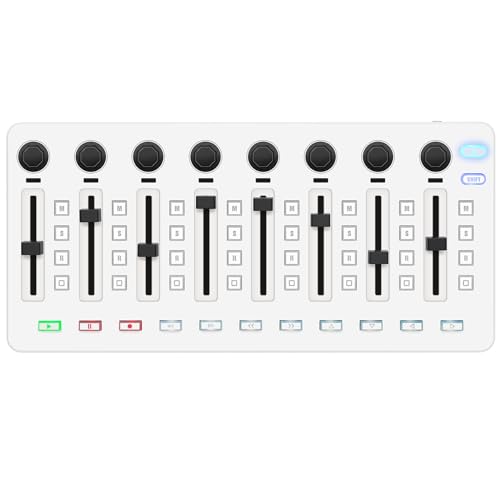
M-WAVE Wireless MIDI Controller Mixer, Bluetooth Portable USB MIDI Controller Mixer with 8 assignable control actuators, 8 Knobs, Rechargeable battery. Integration with Popular DAWs (White Mixer)
$59.99Check Price →If the top pick doesn't quite fit your situation, M-WAVE Wireless MIDI Controller Mixer, Bluetooth Portable USB MIDI Controller Mixer with 8 assignable control actuators, 8 Knobs, Rechargeable battery. Integration with Popular DAWs (White Mixer) is worth a close look as a capable alternative that still covers the essentials well.

summina MIDI Controller Strike Pad Midi Drum Pad RGB Backlight MIDI Keyboard BT Connection Low Latency 16 Strike Pads 8 Assignable Knobs Note Repeat Portable MIDI Pad Controlador Midi
$49.99Check Price →For buyers who want the most for their money without sacrificing the features that actually matter, summina MIDI Controller Strike Pad Midi Drum Pad RGB Backlight MIDI Keyboard BT Connection Low Latency 16 Strike Pads 8 Assignable Knobs Note Repeat Portable MIDI Pad Controlador Midi is the practical choice at this price point.
Identify Your Core Needs
Before immersing yourself in specs, sit down and get clear on what you actually need from a MIDI controller. Are you a composer building mockups, a live performer triggering loops, or a studio musician tweaking synth parameters? Different scenarios call for different tools. For example, if you're mainly sequencing in your DAW and doing composing work at a desk, a compact controller with just keys and maybe some transport controls could do the trick. But if you’re on stage, quick access to pads and performance features become more critical.
Also, consider what instruments you'll be controlling. For instance, if you frequently automate effects or add expression controls, a controller with assignable knobs and faders is essential. Conversely, if your focus is on melodic parts, prioritize quality weighted keys and intuitive mapping. Know your workflow — a good fit means fewer misfires in the heat of a session or live gig.
Size & Portability: Studio or Stage?
There's a big difference between a 88-key beast and a compact pad controller you can stow in a gig bag. If you’re frequently on the road or have limited desk space, go for a lightweight, portable model. For example, a 49-key controller like the Arturia KeyLab Essential balances playability with portability, making it a solid choice for gigging musicians who still want decent key action.
On the other hand, if your studio setup lives in one place and you want to emulate the feel of a traditional instrument, a full-size 88-key model might suit you better. Remember, size impacts your tactile experience and also how easily you can incorporate the controller into your existing gear — like stacking it with a synth rig or integrating it with your DAW setup.
Feel & Playability: Keys, Pads, Faders
This is the heart of your MIDI controller. How comfortable it feels directly influences your performance — whether you’re building beats, tweaking synth parameters, or just playing through ideas. Weighted keys mimic piano feel, but often lack the responsiveness most producers want for fast riffs or intricate synth work. Semi-weighted or synth-action keys offer a good balance of feel and speed.
Pads are another crucial element. Quality velocity-sensitive pads with a good bounce and sensitivity let you sequence drums or trigger samples naturally. Faders and knobs provide hands-on control for automation and tweaking live. Test these controls in a real-world scenario — if the pads respond immediately and the keys have a satisfying action, you’re more likely to stay inspired and avoid frustration.
Integration & Compatibility
You want your MIDI controller to play nicely with your existing gear. Before buying, double-check that it plays well with your DAW, your synths, and your audio interface. Most controllers today support Mackie Control, HUI, or MIDI CC mappings, but always verify. If you're working with Macs, PCs, or adding modular gear, compatibility ensures smooth workflows.
Some controllers come with downloadable templates or dedicated software for seamless integration — a massive time-saver. Also, think about expandability; can you add extra modules or controllers down the line? If you plan to grow your setup, look for models that support multiple zones or multiple MIDI channels.
Build Quality & Reliability
MIDI controllers are often overlooked but having a sturdy build is crucial, especially if you gig regularly. Cheap plastic chassis and loose knobs mean one rough gig or frequent hauling could lead to failure. Prioritize metal encasements, high-quality faders, and solid-key mechanisms. You want gear that can handle your intensity, whether that’s in the studio or on stage.
Read reviews from working musicians. Durability often becomes evident in how well controls respond after heavy use. Also, consider warranty and customer support — it’s worth paying a little extra for gear that lasts and is backed by a reputable brand.
Features for Creative Control
Finally, look at the bells and whistles. Do you need multiple assignable knobs and faders for complex automation? Do you want dedicated transport controls for your DAW? How about drum pads with RGB lighting for live performance feedback? Think about how these features will actually improve your workflow — not just look good on a spec sheet.
The most valuable feature in a MIDI controller is intuitive layout. If controls are cluttered or poorly labeled, they become more of a distraction than a help. Also, consider integrating with software plugins — some controllers come pre-mapped for popular synths and effects, saving you setup time and frustration.
Frequently Asked Questions
Do I need a MIDI controller with keys, or can I use pads and knobs alone?
If your focus is sequencing beats or controlling synth parameters, pads and knobs might suffice. However, if playing melodies or chord progressions is part of your workflow, keys are essential for expressive playing. Many controllers combine both, offering versatile control.
Can I use a MIDI controller without connecting it to a computer?
Generally, MIDI controllers require a connection to a computer or external sound module to generate sounds. Some hardware synth controllers have built-in sounds, but most are designed to control external gear and require syncing with your DAW or hardware synths.
Is USB the only connection I should consider?
While USB is the most common and convenient connection, some controllers also offer MIDI DIN ports for integrating with legacy gear or complex setups. Consider your existing gear — a controller with both options offers maximum flexibility.
How important is key action quality relative to the budget?
Extremely important. Good key feel helps you stay expressive and avoid fatigue during long sessions. Investing in a controller with decent weighted or semi-weighted keys often pays dividends in responsiveness, especially if you play multiple instruments.
Should I prioritize software bundle or hardware features?
A good software bundle can boost your creative options right out of the box, but don’t ignore hardware quality. Prefer controllers that offer a balance of both so you get reliable tactile control and meaningful software support.
Conclusion
Choosing the right MIDI controller isn’t about chasing the flashiest features — it’s about finding a tool that feels right to your hands, matches your workflow, and stands up to real-world gigs and sessions. Prioritize feel, build quality, and compatibility, and you’ll find a controller that becomes an invaluable part of your creative arsenal. If you want to step up your studio game or stage setup, start by analyzing your needs and then test a few models with your own hands. The perfect controller is out there — you just need to find it.
Now that you know what to look for, the next step is to demo controllers in person, see how they fit your workflow, and choose one that inspires you to create more confidently and more often.


